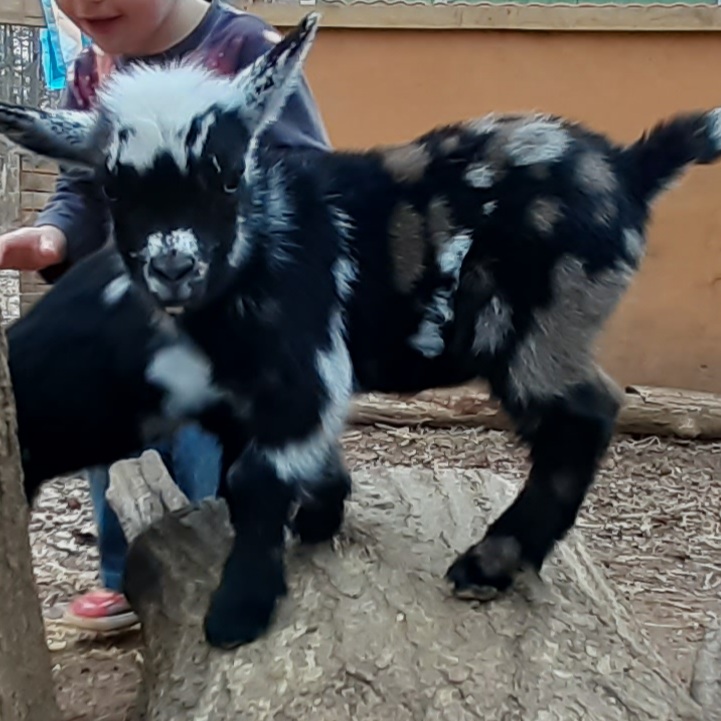
I put together a list of necessities for when you bring home your baby goats! I intend to hand out a paper version of this list, but I thought I’d also put it here.
Shelter
Your goat’s shelter can be as elaborate or simple as you want. It can be a repurposed dog house, a three- sided pallet shelter or a fancy goat barn. As long as the goats are protected from wind and rain, they are pretty hardy and can stay warm.
Fencing
Goats can be escape artists, so a sturdy fence is a must. It should be at least 4ft tall and can be chain link or farm fencing. If you use farm fencing, make sure the openings are small enough that a goat can’t get its head stuck. Two inches by four inches would work well. Also, Nigerian dwarf goats do not need a ton of space. About 200-250 square feet of fenced area per goat should suffice.
Food
Does/doelings: I feed about 1 cup of grain per adult doe and ½ cup per kid. Kids and does in milk get Purina Grower Feed. You can add alfalfa pellets or Chaffe hay for extra protein and calcium. I feed grass hay (mixture of Timothy grass and orchard grass) that I get from Southern States in Reidsville free feed. There are other grass hays available, but some are better for goats than others. Fescue is usually available but I only get that if I can’t find anything better.
Bucks/bucklings/wethers: I feed them free feed grass hay and forage. Kids can get grower grain for a while, but with males you have to watch the calcium to phosphorus ratio because they can form urinary calculi and a blockage can kill a goat. A ratio of 2:1 calcium to phosphorus is required for urinary tract health in adult male goats. Purina Goat Feed (not grower) has the correct ratio. I tend to not feed much grain to my male goats.
Forage is important for all goats. Goats browse and eat “up.” They won’t mow your grass but they will eat your vines and weeds, shrubs and flowers. Familiarize yourself with poisonous plants. Camellia, azalea, and boxwood are poisonous to goats, among others.
Vaccines
I vaccinate my goats yearly for rabies and every six months for CD&T. I lost a young goat to tetanus in my first year, so I won’t skip those. Some people choose not to vaccinate, and that’s fine, just know there are preventable diseases they can get that are deadly. I also test my herd for CAE (caprine arthritis encephalitis). This is a disease they can only get from other goats, so if you have a closed herd, testing doesn’t have to be performed as often.
Issues
The stress of moving to a new home can overwhelm a baby. It can cause a higher parasite load to develop. Diarrhea in kids can be very serious because they are so small. If it doesn’t resolve in a day, treat with Corrid or Cydectin Sheep Drench. Learn to check FAMACHA scores. There are a lot of useful tips online to help with that. It is an easy way to tell if your goat is anemic, which can mean a high parasite count.
Treats
My goats love banana and orange peels. Licorice treats made for goats and plain animal crackers are also well loved. Most things that go in a salad are good for goats as well!
Supplies
I keep a nutrient drench on hand in case someone isn’t thriving. I also put together a kidding kit with probiotic paste and colostrum paste, iodine for wounds or umbilicals, towels and gloves. Hoof trimmers are needed as goats’ hooves grow like fingernails and need trimmed. I have the CD&T vaccine on hand. I usually let the vet do the vaccines once a year with the rabies because they have to administer rabies vaccines anyway. Then we give the CD&T 6 months later.
So there you have it! This is my list of important things to consider when bringing home a baby goat (or two).
 Bailey's Farm